A health examination gives a picture of how employees are doing at a given point in time. But the real value comes when the results are followed over time, analysed in light of the organisation's needs and turned into relevant initiatives.
For BMW, recurring health examinations with OneLab have become a tool for detecting changes, identifying areas that need attention and developing its health work based on employees' actual needs.
Recurring examinations show how needs change
Before the summer, BMW's employees completed their health examinations with OneLab at the company's offices in Sollentuna and Malmö. When the HR team compared the results with the 2024 examination, they could see how the organisation's health had developed.
The comparison showed both positive developments and areas that still need attention. The results thus gave BMW's HR team a more up-to-date basis for assessing which parts of its health work are relevant to prioritise going forward.
For the team at BMW, the follow-up is not about treating the results as a final grade on the organisation's health. BMW uses the group-level results to understand how needs are changing and to create the conditions for initiatives tailored to employees and the business. In parallel, OneLab works at the individual level by following up with employees who need support through individual health advice or counselling.
Data becomes more useful when it is discussed
A health examination provides a lot of information, but the numbers do not always tell the whole story. For Majda Zenuni, HR Generalist at BMW, and the rest of the HR team, the dialogue around the results is therefore an important part of the process – to understand what lies behind them and what is relevant to take forward.
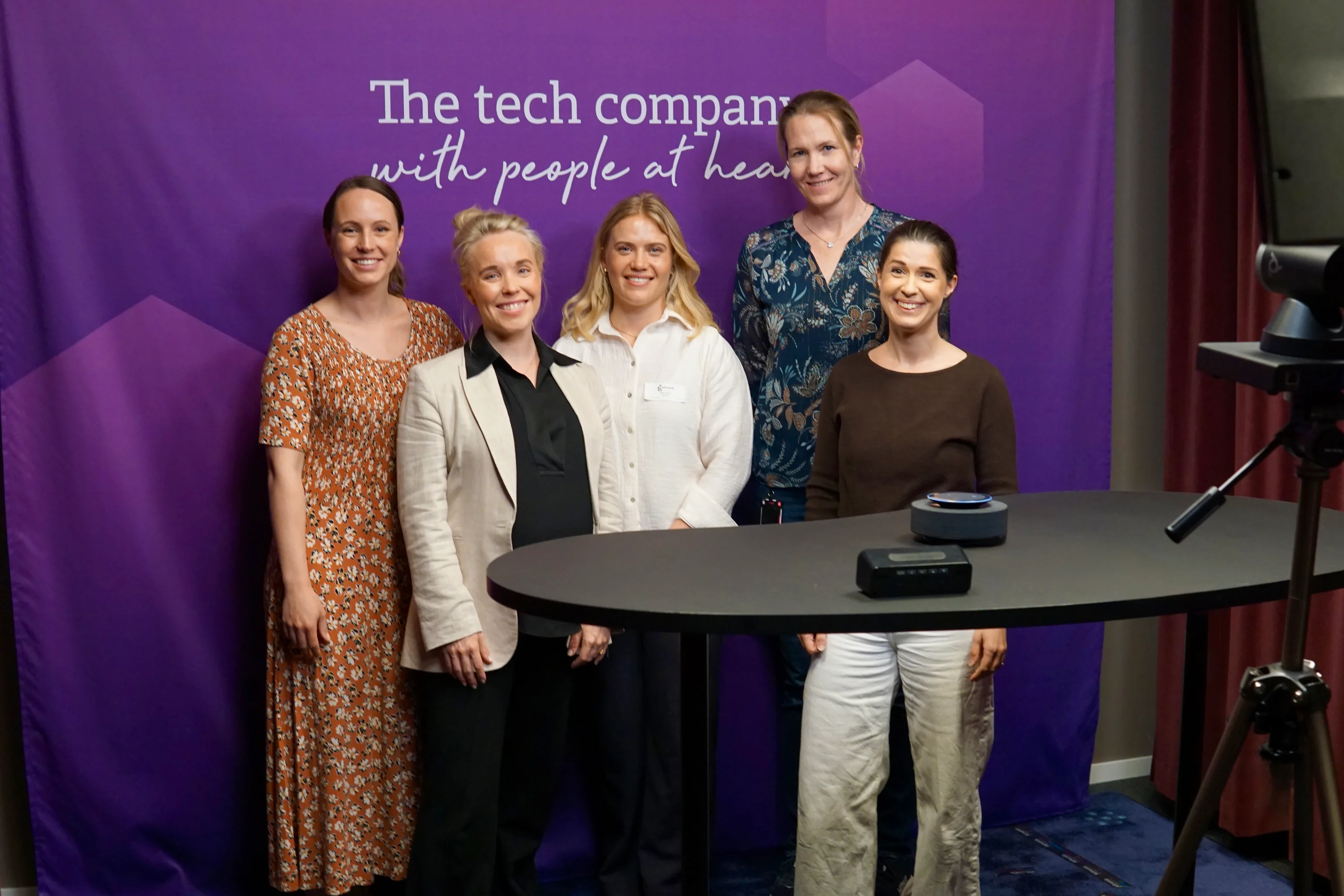
Together with Mira Lidell, Customer Success Manager at OneLab and a public health scientist with expertise in health-promoting leadership, the team goes through the results and discusses patterns, possible explanations and the questions they raise.
Majda and her colleagues share their view of the organisation and what they see in their day-to-day work. Mira helps shed light on the results from different perspectives, draws attention to things that can easily be overlooked and shares experiences of how other organisations work with similar health challenges.
"It's really valuable to have Mira with us when we go through the results. She helps us notice things we might not have thought of ourselves. We can ask questions, discuss our own reflections and get inspiration from how other companies work with similar health challenges."
 Majda Zenuni
HR Generalist, BMW
This means the review becomes more than a check of which values are green or red. BMW gains a deeper understanding of the results, what may lie behind them and which areas are relevant to keep working on.
Health is part of BMW's ongoing work
For BMW, employee health is not something that only gets attention in connection with health examinations or one-off activities. The company works continuously to keep health and wellbeing on the agenda across the organisation.
An important part of this is creating a work environment where there is room to talk about how you are feeling. BMW wants to make it easier for employees to raise questions about their health and for managers to pick up on signals in everyday work.
This means health needs to be a natural part of the regular conversations between managers and employees, not something that is only raised once a problem has become obvious. In this way, health work becomes an integrated part of everyday working life and of the organisation's long-term efforts to create sustainable conditions for its employees.
Employees are also encouraged to contact OneLab's healthcare professionals if something does not feel quite right or if they need advice and guidance about their health.
Participation starts with employees understanding the value
For health data to give a relevant picture, employees also need to want to take part.
BMW's experience is that the value of recurring health examinations can sometimes be forgotten, especially when you feel healthy. But even results without clear risk markers provide valuable information about which healthy habits are already working and are important to maintain. And if the examination shows something that needs to be followed up, it creates an opportunity to act early.
That is why OneLab held a kickoff ahead of this year's health examination, attended by just over 100 employees. The aim was to explain what the health examination involves, why it is repeated and what support is available.
During the kickoff, employees learned why regular health examinations are important, what OneLab examines and what support is available. A central part was also making clear that confidentiality applies and that each employee's results are protected by patient confidentiality. The kickoff contributed to higher participation compared with 2024.
What can other HR teams learn from BMW's approach?
BMW's experience shows that the value of a health examination does not stop at the measurement itself. For the results to contribute to more targeted health work, they need to be followed over time, understood in depth and turned into relevant initiatives.
The measurement provides a snapshot. Comparisons over time can reveal changes. Dialogue around the results helps the organisation understand what may be relevant to prioritise. After that, initiatives need to be adapted to both the results and the organisation's circumstances.
For employers, this means the focus of health work may need to shift over time. Needs can change, and different groups within the same organisation may also have different circumstances.
That is why recurring data becomes interesting. Not to give a simple grade on the organisation's health, but to give HR and management a better basis for the next decision.
BMW's work continues. One of the next steps is to use OneLab's AI feature to analyse historical results more easily and get support in identifying possible actions based on how things have developed.
In this way, several years of health data can become more than history. It can become a basis for continued preventive health work.