Written by Ella Amandusson
Registered Nurse at OneLab
We know more about health than ever. So why do we still feel unwell?
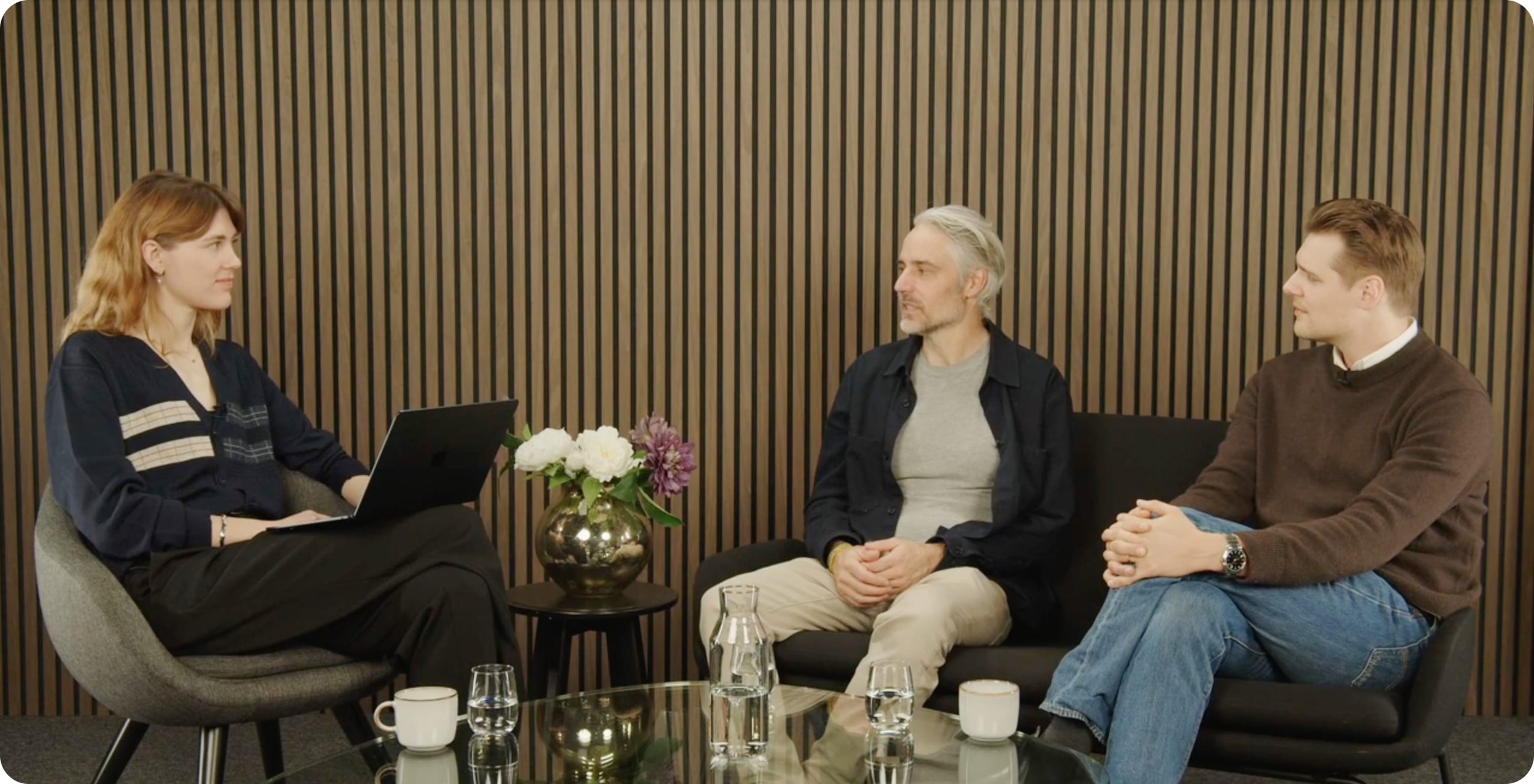
We live longer. We survive diseases that used to be fatal. We have access to more knowledge about diet, exercise and health than any generation before us. And yet lifestyle diseases and mental ill health are on the rise. How does that add up, and what should we do to feel better? That was the starting point of a webinar between OneLab's CEO and founder David Strömbeck and Anders Wallensten, physician, epidemiologist, researcher and author of several books on health and wellbeing, including Hälsogåtan (The Health Puzzle).
The health paradox: more knowledge, poorer wellbeing
According to Wallensten, we are living in an abundance of health advice, trends and quick fixes. We "know everything", but that is precisely why it has become harder to navigate. Much of the advice lacks a scientific basis and points in different directions. At the same time, a more fundamental explanation may be even more important: we are not made for the lifestyle we live today. Through evolution, our bodies and brains have been shaped for a life radically different from the modern one.
For example, physical effort used to be required to get food, rest was taken when there was time, and energy-rich food was rare in nature. Today it is the other way around: energy-dense, nutrient-poor food is easily available, movement is optional, recovery is postponed, and impressions, information and decisions never end.
The foundations of health: diet, movement and sleep
Wallensten keeps returning to three biological pillars: diet, movement and sleep.
Sleep in particular is highlighted as perhaps our most underrated "treatment". Good sleep provides energy, strengthens the immune system, helps the brain process emotions and memories, improves mood and stress resilience, and creates the conditions for healthy choices. Lack of sleep, on the other hand, puts us in a constant survival mode. We become more irritable, less empathetic and worse at making wise decisions. Part of the problem is that everyday life is full of sleep thieves, such as work and family responsibilities, news feeds, screens and an endless supply of entertainment. Many people notice how much better they sleep on holiday, especially in environments with fewer impressions or closer to nature, where the brain feels at home in a way it does not in the digital noise.
Another important insight is how the number of choices in everyday life affects us. Our brains are not built to make hundreds of active decisions every day. Every choice costs mental energy.
One way to deal with this is to turn what we want to do, for example living healthily, into habits. When behaviours run on autopilot, the mental load decreases and there are fewer active choices to make. In the long run, small, sustainable habits and routines beat big ambitions.
Health is also about relationships, thoughts and environment
Beyond the biological foundations, Wallensten points to three areas that often end up somewhat overlooked: relationships, thoughts and our surroundings. Studies show that relationships are one of the factors most strongly linked to perceived quality of life and health, and loneliness is in itself a health hazard. Humans are herd animals; we have survived through community, cooperation and shared thinking. The important thing is that relationships do not need to be deep or perfect to matter for health. Even brief encounters and small social contacts have measurable positive health effects.
Our brain is built to worry, because being prepared for potential future threats has helped us survive. The problem is that the same system today often gets stuck worrying about things we cannot influence and do not need to protect ourselves from in order to survive. Stress then becomes chronic instead of helpful. Mental ill health is complex and sometimes professional care is needed. But much of everyday mental ill health can be eased through awareness of thought patterns: being able to notice "there I go thinking like that again", understanding that not all thoughts are true or relevant, or learning to let thoughts pass without getting stuck. Tools from positive psychology, such as gratitude exercises, meditation and reflection, can help. Grateful thoughts, for example, make it hard to get stuck in negative spirals at the same time.
What does all this mean for employers?
A central question in the webinar was whether we can expect performance if people are not given the conditions to recover. Employers cannot control their employees' bedrooms, but they can influence much of what disturbs sleep, for example high stress, a low sense of control, unclear demands and a lack of support. A good work environment is characterised by attentive managers, a reasonable workload and the opportunity to influence your own situation.
The workplace can also act as a social protective factor. In a time of increased remote work, the question of loneliness also arises. For many people, the workplace is one of the most important sources of social community. Small things make a big difference, like inviting people to talk, creating inclusive settings or encouraging movement during the working day. The power of habits can also be harnessed in the workplace. Creating shared routines and traditions for breaks, physical movement or social interaction turns the healthy choices into non-choices and produces health effects automatically.
Wallensten also stresses the importance of kindness at work. Helping, sharing and showing care is contagious and shapes the culture over time. Health does not always need to be measured, competed over or compared. For some, that can even create stress.
Small actions, big effect
Perhaps the most important conclusion from the webinar is that health is not created through perfect lives, but through reasonable choices, good habits and humane environments. We do not need to do everything right. But when we adapt our lives and workplaces a little more to how we are actually made to live, we create the conditions to feel good, at work and in life.
Did you miss the webinar?
The recording is in Swedish.