Exhaustion disorder (utmattningssyndrom) is a diagnosis used only in Sweden, and it is also the most common cause of long-term sick leave there. But after being used for more than 20 years, the diagnosis is to be removed, a change that is sparking debate among researchers and experts.
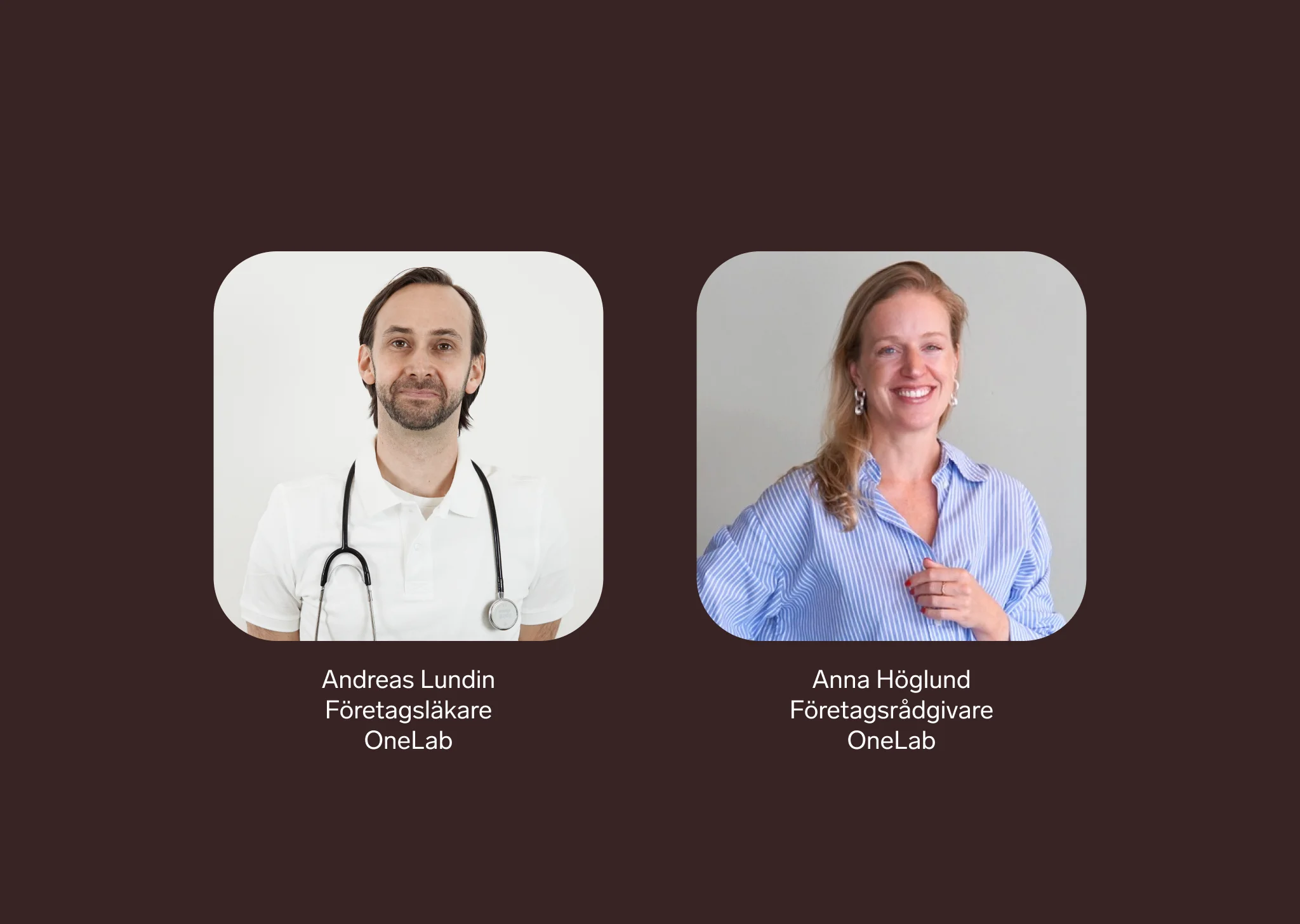
In this webinar, OneLab's occupational health physician Andreas Lundin and business advisor Anna Höglund explain what lies behind the change and what consequences it may have for those affected and for employers.
The webinar is in Swedish.
We also take a closer look at how long-term stress affects the body and the brain, how early signs of exhaustion can show up physically and mentally, and how HR and employers can pick up on warning signs and put the right support in place in time.
We also highlight the link between women's health and exhaustion. Hormonal changes, for example during perimenopause and menopause, can cause symptoms such as sleep problems, mood swings and difficulty concentrating – symptoms that can also occur with long-term stress. How can we get better at understanding what lies behind an employee's wellbeing and make sure the right support is put in place?