
Written by Erika Ekstam
Head of People & Culture at OneLab
Offering health examinations to employees is an important step towards a sustainable work environment. But how the examinations are carried out matters a great deal for both engagement and participation. When examinations are made accessible – either digitally or through on-site visits – the risk of groups of employees slipping through the cracks is reduced. It is often precisely those who need support the most who would otherwise not be reached.
Accessibility determines whether more people take part
Research shows that accessibility is a decisive factor for participation in health promotion programmes. The easier it is to take part in an initiative – geographically, practically and psychologically – the more people participate. (Public Health Agency of Sweden (Folkhälsomyndigheten), Att nå ut med folkhälsoarbete, 2023).
This means that employers who make health examinations easily accessible not only get more participants, but also reach groups who would otherwise risk being left out. This is particularly important for companies with geographically dispersed operations, where the distance to the nearest health centre can become an obstacle.
Meeting in person builds trust
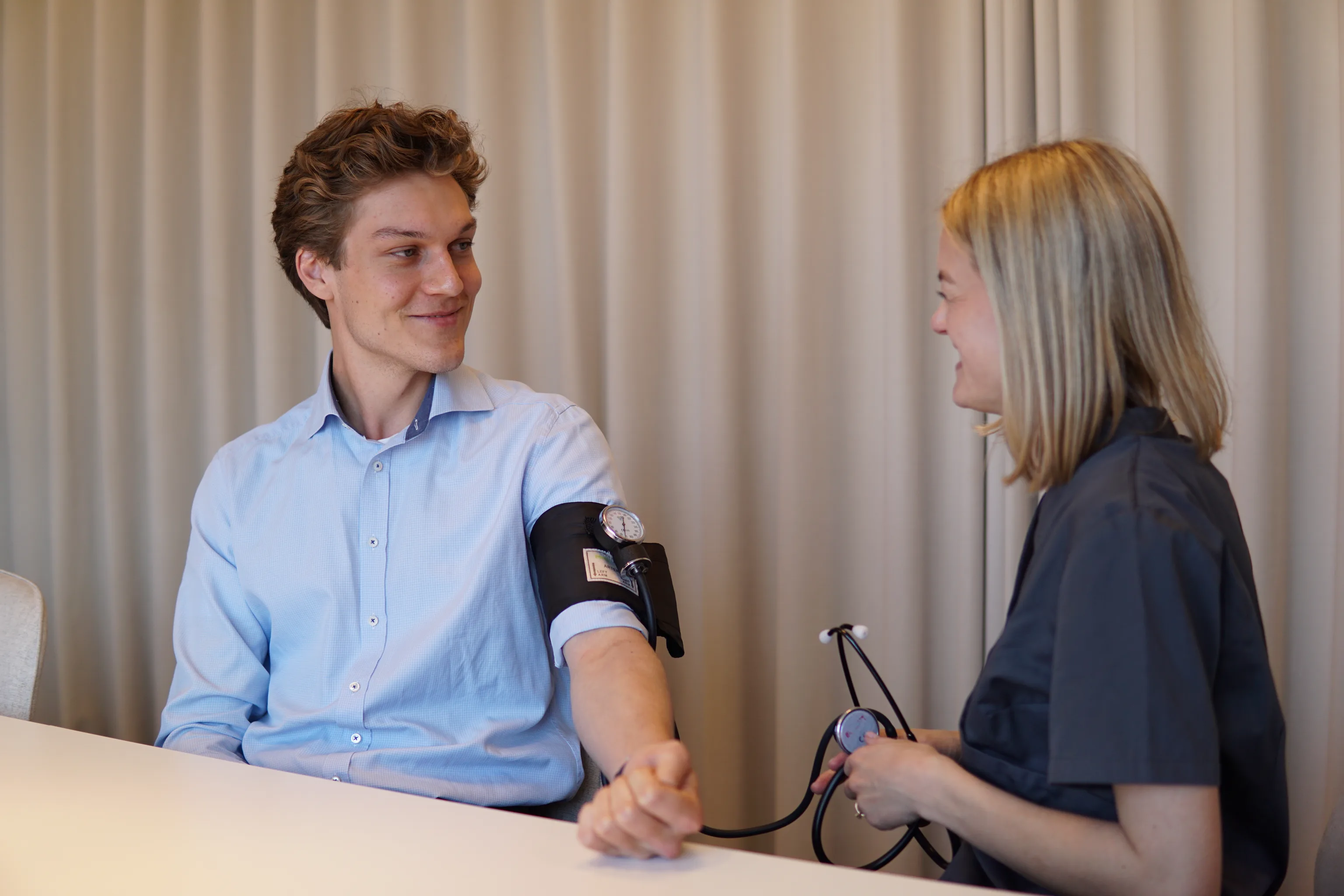
When health examinations are carried out at the workplace, a different kind of dialogue emerges. Employees get the chance to ask questions and talk directly with a medical expert in an environment they recognise. That lowers the threshold and strengthens the sense that the employer genuinely prioritises their health.
Another important aspect is that the occupational health provider acts as an objective third party. Employees know that their answers are handled anonymously and do not go directly to the employer. That knowledge builds trust and makes it more likely that they dare to be honest about their needs – both physical and psychosocial. In this way, the examinations become not only a health check, but also a channel for picking up signals that are otherwise easily missed.
The Sveaskog example
Sveaskog is a company with operations in around 50 locations across Sweden. For such a dispersed organisation, it would have been difficult to reach all employees without a combination of solutions.
When OneLab carried out on-site visits with health examinations, significantly more employees were able to take part – and the initiative was experienced not only as a matter of health checks, but also as a way of creating dialogue and engagement around the work environment and health.
Read more about Sveaskog's approach here.
More accessible occupational health care
By combining digital health examinations with on-site visits, OneLab offers a model that ensures high participation and captures needs that would otherwise risk remaining invisible. For employers, this means a fairer and more comprehensive picture of employee health – and therefore a better basis for decisions on preventive work environment initiatives.