
Written by Johanna Frank
Business Advisor at OneLab
Many people associate nursing with hospital wards, emergency departments and patients who are already ill. For Fanny Berlin, a nurse at OneLab, everyday work is about something entirely different – detecting risks before they lead to sick leave or serious illness.
After several years in emergency care, Fanny was used to meeting people when illness was already a fact. Patients came in when their symptoms had become so serious that they needed care. The work was about prioritising, treating and putting out fires.
Two years ago, Fanny chose to leave traditional healthcare to start working in occupational health at OneLab.
"I was curious about what we can actually do earlier in the chain of care. In healthcare, we often meet people only once the problems have been there for a long time. I wanted to work more preventively and see what difference it can make. My hope is that we can help ease the burden on the healthcare system."
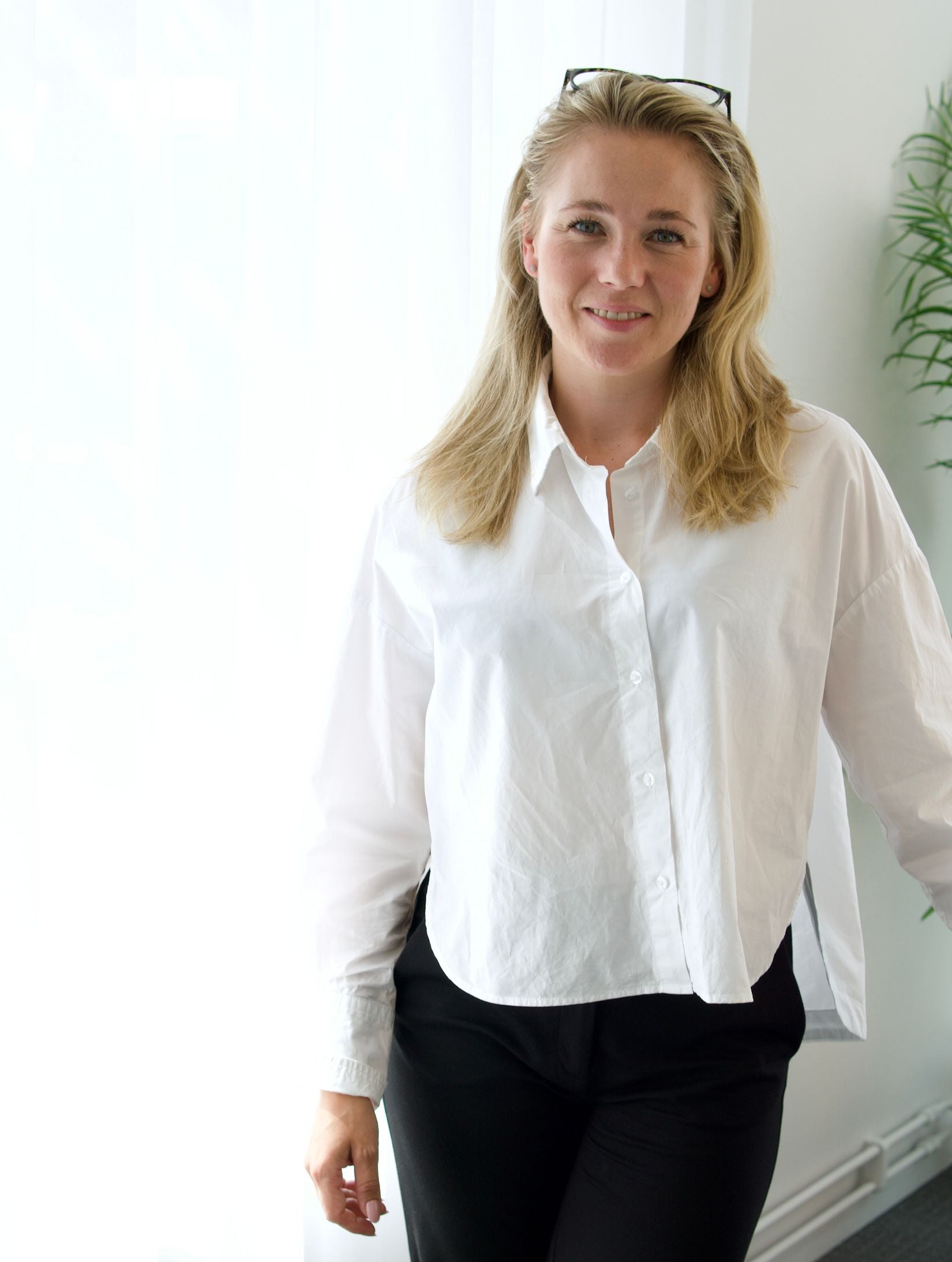
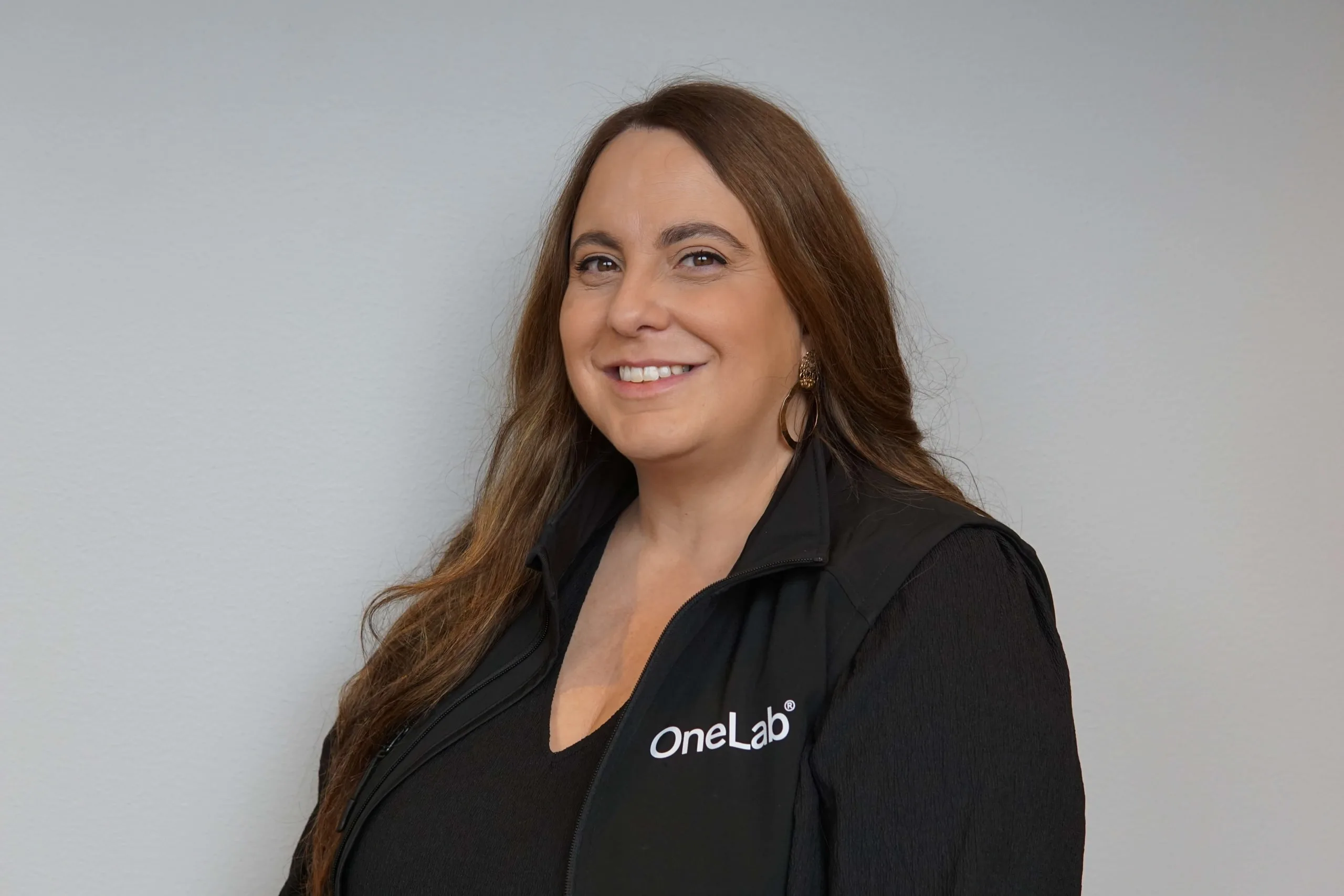
Fanny Berlin, registered nurse at OneLab.
"Many people who are unwell don't look ill"
Fanny says that one of the biggest lessons from working with health examinations in the workplace is how hard it is to tell how someone is really doing.
"Sometimes you sense almost immediately that someone isn't well. Other times you meet someone who seems happy, energetic and healthy, but the results show something completely different."
This applies to both physical and mental health. High blood pressure, iron deficiency or high blood lipids often cause no clear symptoms at first. Mental ill health can also develop gradually and be difficult to notice in yourself.
"The body is amazing at adapting. Problems develop slowly, so you gradually get used to them. Many people think they are just a bit more tired than usual, or that it's down to small children, stress or an intense period at work."
Many get used to feeling worse
That is exactly why Fanny believes many people miss the early signs. When change happens gradually, it also becomes hard to detect.
"Stress and exhaustion rarely come from one day to the next. It's something that creeps up on you."
This is also why she thinks preventive health examinations fill an important role.
"We can point out things the person may not have reacted to yet. At that point there is still an opportunity to do something before the problems grow bigger."
The preventive perspective is what motivates Fanny the most.
"In my work at OneLab, I meet people who still see themselves as healthy, unlike when I worked in hospital care. That means we can detect risks long before they lead to illness or long-term sick leave."
She describes it as OneLab filling a gap that often exists between the healthy individual and traditional healthcare – by identifying risks in people who do not yet see themselves as patients.
Understanding your health is an important part of prevention
When Fanny describes her work, it is not only about detecting risks. Just as important is helping people understand what the results actually mean.
"We do a great deal of educating. It becomes almost a kind of public health education, because we meet many people who rarely or never have been in contact with healthcare."
She explains that many have never had it explained to them what long-term stress does to the body, why high blood pressure can be dangerous even if you have no symptoms, or how sleep, lifestyle and mental health are connected.
"We don't just want to say that something deviates. We want the person to understand why it matters and what they can do about it themselves."
High blood pressure is a clear example, says Fanny. It is a risk factor that often develops without any clear symptoms.
"You can live with high blood pressure for many years without noticing it. Meanwhile, the blood vessels can be damaged, and sometimes it is only discovered when the person suffers, for example, a heart attack or other serious cardiovascular problems."
That is why early detection can make a big difference.
"If we detect high blood pressure long before it would otherwise have had time to cause serious health problems, we have the chance to act in time. We can inform them about the risk, motivate lifestyle changes and help the person on to the right care. That way we can hopefully reduce the risk of future cardiovascular disease and other complications."
For those who do develop a serious secondary condition, however, it can be the start of a long chain of care.
"It can mean hospital stays, medication, follow-up appointments and sometimes lasting health problems. If we can detect the risks early and help someone change their habits, there is a chance the person may never end up there. That's where I think preventive work makes the biggest difference."
For Fanny, knowledge is an important part of preventive work. The earlier people understand their health and their risk factors, the greater their chances of making changes before the problems have time to grow.
"Many would never have sought help on their own"
But what is uncovered in a health examination is not only about physical health. Sometimes things emerge that are not visible on the outside – and that the person might never have sought help for on their own.
One of the encounters that has stayed with Fanny was with a man in his fifties. During the health examination, it emerged that he was having suicidal thoughts, something nobody around him knew about. On the outside, there was nothing that clearly signalled how bad he was actually feeling.
"He had never sought help himself. He didn't really believe in talking about mental ill health. But when we reached out, he still chose to talk to me."
The conversations were many and long. For Fanny, the encounter was a clear reminder of the importance of reaching people before they take the step of seeking care themselves.
"What moved me most was that he would never have taken this step on his own. Because we work proactively, we were able to identify him and help him further."
Fanny stresses that OneLab's role is not to treat mental ill health, but to map it, make a medical assessment and guide the person to the right care. But sometimes the first conversation can be decisive in whether someone dares to accept help.
And it is conversation that Fanny comes back to when asked what advice she would give to someone who notices they are not feeling well mentally.
"Dare to talk to someone. It doesn't have to be a manager, a psychologist or someone in healthcare. It can be a colleague, a friend, a family member or someone else you trust. Many people feel alone with how they feel, but putting into words what feels difficult can be the start of a change."
For Fanny, preventive work is therefore about both detecting risks and creating space for conversation – before the problems have had time to grow.
"You don't have to wait until you get sick to take your health seriously. The earlier we pick up the signs, the greater our chance of making a difference."
Read more about the importance of identifying suicidal thoughts in time.
Employers gain from working preventively
Fanny wishes more employers saw preventive health as an investment rather than a cost.
"It's easy to see the cost of a health examination, but much harder to see the cost of long-term sick leave or lost work capacity."
She believes employers have a lot to gain from detecting risks early.
"Healthier employees, higher engagement and less sick leave are good for the individual, the organisation and society alike."