
Written by Ebba Roxell
Registered Nurse at OneLab
What is stress, why does it arise and how can we prevent long-term stress through recovery? Stress in itself is not dangerous. On the contrary, it is a natural and necessary reaction that helps us perform. The problem arises when stress becomes long-term and the body does not get enough recovery.
Recovery is the key
The most important form of recovery is sleep, because that is when the body and brain rebuild energy. But recovery is also about giving the stress system a chance to wind down through activities that suit the type of strain you are under:
- With physically demanding work, physical rest is needed
- With mentally or emotionally demanding work, physical activity, nature, socialising or other relaxing activities can be more restorative
Recovery is individual; the important thing is to find activities that help you let go of stressful thoughts and be present in the moment.
How stress works in the body
When the brain perceives a threat, the stress system is activated and hormones such as cortisol and adrenaline are released. This makes us ready to act (fight or flight). Normally there is a braking system that returns the body to balance after about 30 to 90 minutes. But if new stress responses keep coming, the body never has time to recover.
Exercise helps the stress system
Regular physical activity is one of the most effective ways to train the body's braking system. After exercise that raises your heart rate, a sense of calm often follows because the body activates its recovery mechanisms. For people who are already exhausted, however, calmer activities such as walks and low-intensity exercise are recommended.
Worry amplifies stress
Worry in itself can create stress. If you become afraid of being stressed, it can lead to a negative spiral where the stress is amplified further. Under stress, the brain's logical thinking works less well while emotion-driven reactions take over. The good news is that these changes are usually reversible with the right recovery and treatment.
Early signs of unhealthy stress
Some important warning signs are:
- constant tiredness despite rest
- difficulty switching off your thoughts
- difficulty concentrating and planning
- a feeling that everyday life is becoming overwhelming
- poorer sleep over a longer period
Sleep is described as the clearest indicator that recovery is no longer enough.
Working life and recovery
Flexibility and remote working can be positive for recovery because they give greater control over your time. At the same time, there are risks if the line between work and free time becomes blurred. That is why routines, clear working hours and a physical separation between the workplace and home are important.
The employer's responsibility
Managers and employers should:
- explain why recovery is important
- encourage employees to plan in recovery
- create a balance between workload and rest
- pay attention to early signs of stress
- promote physical activity and a sustainable work environment
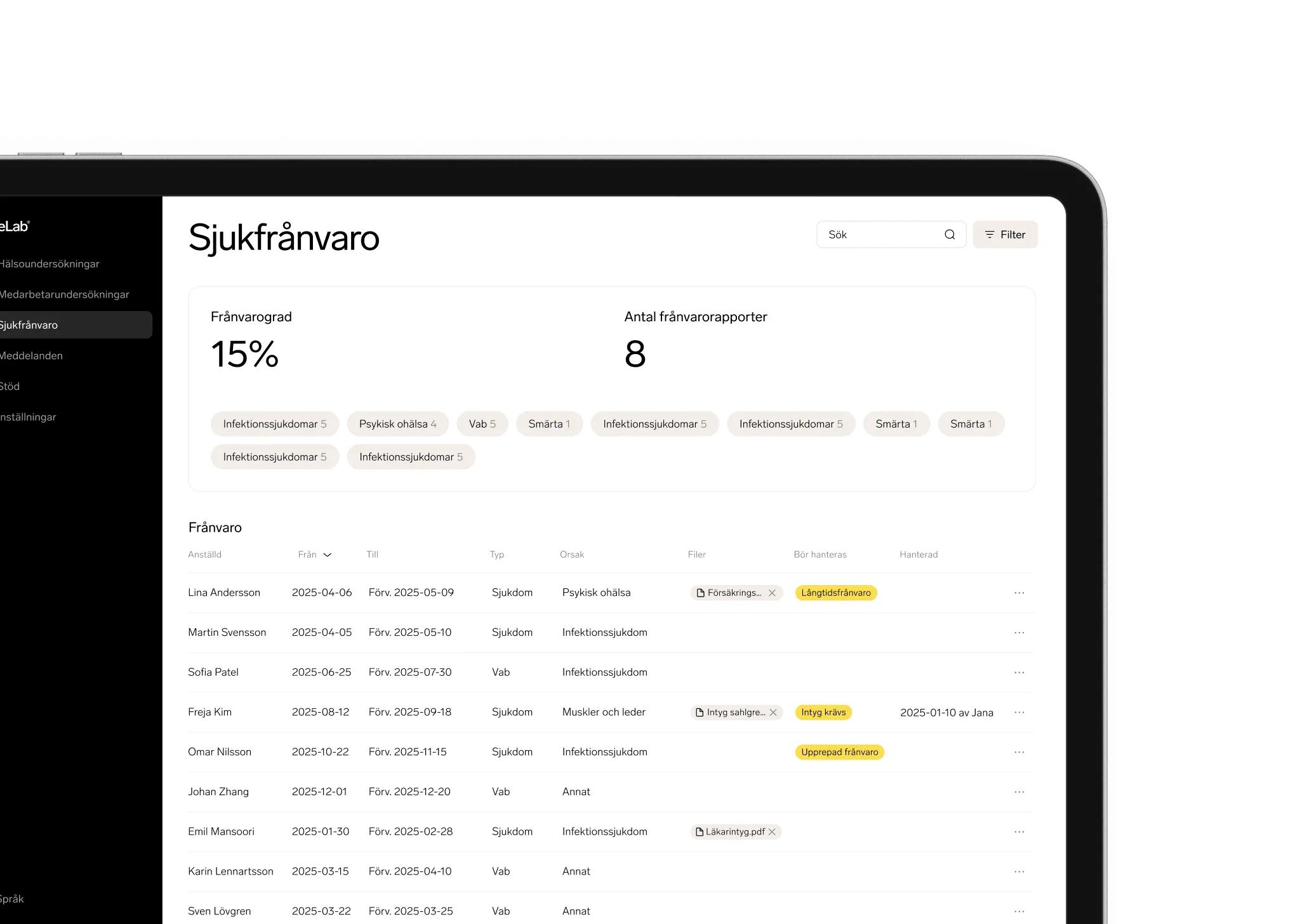
To be able to act on early signs, the employer also needs to see the patterns in time. Read more about OneLab's health examinations and how they can help you detect early signs.
Small habits that make a difference
The most important message is that stress does not need to be avoided; it needs to be balanced with recovery. Good sleep, regular physical activity, clear routines and daily moments of recovery are the most effective ways to prevent long-term stress and exhaustion.
Frequently asked questions about stress and recovery
Is stress dangerous?
What is the most important form of recovery?
How long does it take for the body to recover after a stress response?
What are the early signs of unhealthy stress?
Is exercise good for stress?
What can the employer do to support recovery?